cfDNA
Recover cell-free DNA upstream to support sensitive downstream liquid biopsy analysis.
When the target is rare, what reaches the assay matters.
Cell-free DNA (cfDNA) consists of fragmented DNA circulating in blood and other biological fluids. In cancer, tumor-derived circulating tumor DNA (ctDNA) may represent only a small fraction of total cfDNA, creating a significant analytical challenge for sensitive molecular testing.1
The amount and composition of circulating cfDNA can vary among individuals and across biological and disease states. Because tumor-derived DNA is mixed with cfDNA from non-tumor sources, downstream analysis must distinguish low-abundance tumor-associated molecular signals from the broader cfDNA background.1
ctDNA is also detected less frequently in localized disease than in many advanced cancers.2 When the tumor-derived fraction is limited, the amount of molecular material successfully recovered and carried forward during sample preparation becomes an important upstream consideration.
Rare signal matters
Tumor-derived DNA may represent only a small fraction of total circulating cfDNA.
Beyond tissue
cfDNA provides access to circulating molecular information through liquid biopsy sampling.
Sample prep counts
Recovery influences how much molecular material is available to carry forward.
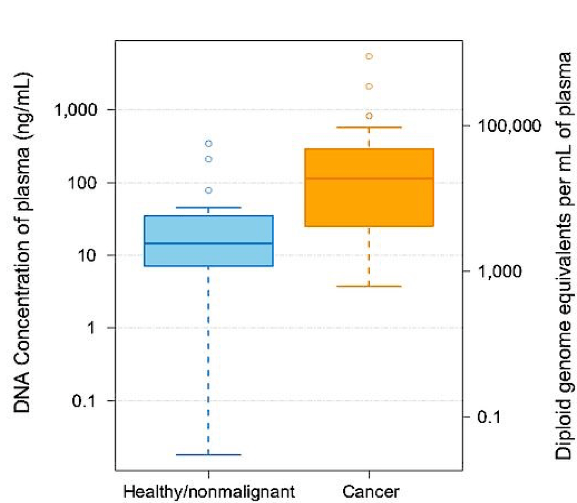
cfDNA concentration can vary substantially.
Reported circulating cfDNA concentrations vary across individuals and disease states.
Published literature describes substantial variability in cfDNA abundance, fragmentation, and the proportion of tumor-derived DNA within the total circulating DNA background.1 These factors create technical challenges for sensitive cfDNA analysis.
Reported plasma cfDNA concentration ranges in healthy/nonmalignant and cancer populations. See reference 1.
What enters the assay defines what can be detected.
The molecular material available to a downstream assay is established upstream. Sample input, recovery, and transfer determine how many usable molecules are ultimately available for downstream analysis.
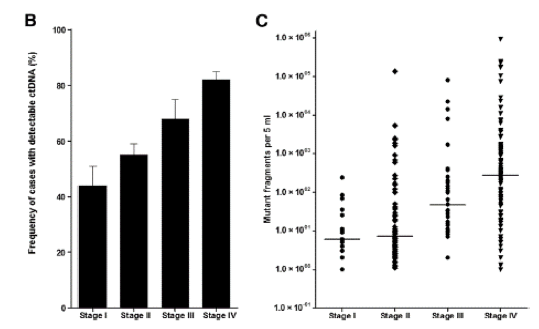
ctDNA is detected less frequently in earlier-stage disease.
Published studies demonstrate that circulating tumor DNA is detected less frequently in localized cancers than in many advanced cancers.2
In the Bettegowda study, ctDNA detection rates varied substantially by tumor type and disease stage. This illustrates the analytical challenge created when the tumor-derived molecular signal in circulation is limited.
Published data illustrating ctDNA detection across disease stages. Adapted from Bettegowda et al., 2014.
Build the cfDNA workflow around the sample.
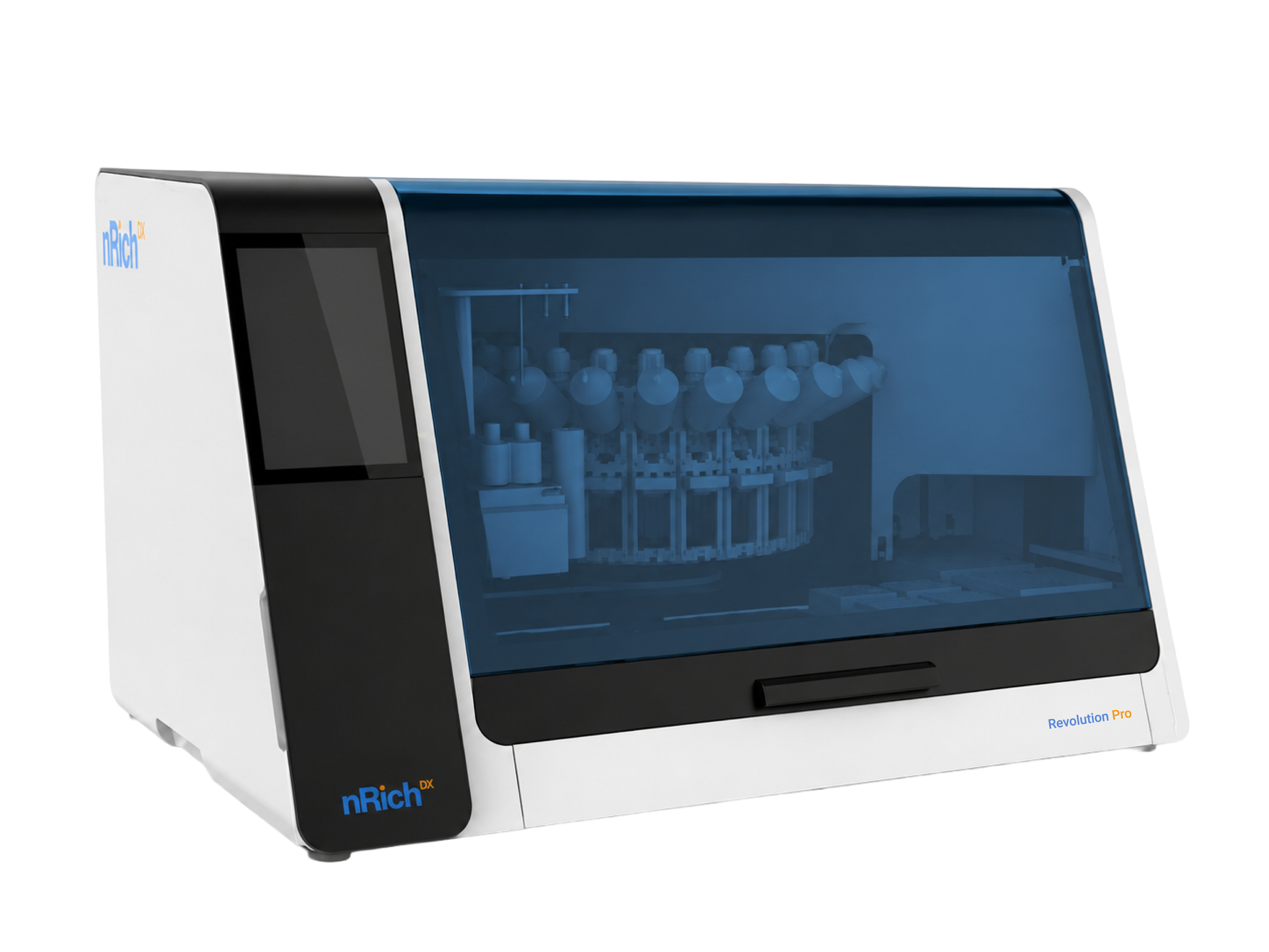
nRichDX Revolution sample-preparation workflows support cfDNA extraction across multiple sample inputs and laboratory configurations.
Use the Revolution Kit Selector to identify the appropriate current kit configuration for your application, then connect with nRichDX to discuss sample input, recovery requirements, automation, and downstream workflow.
Go deeper into the cfDNA workflow.
Explore scientific posters, publications, application data, and collaborative studies covering cfDNA recovery, plasma, urine, automation, sequencing, and downstream molecular analysis.
Literature cited
- Volik S, Alcaide M, Morin RD, Collins C. “Cell-Free DNA (cfDNA): Clinical Significance and Utility in Cancer Shaped by Emerging Technologies.” Molecular Cancer Research. 2016;14(10):898–908.
- Bettegowda C, et al. “Detection of Circulating Tumor DNA in Early- and Late-Stage Human Malignancies.” Science Translational Medicine. 2014;6(224):224ra24.