Revolution cfTNA Max 20 Kit
Designed for circulating total nucleic acid extraction from sample input volumes ranging from 1 mL through 20 mL.
View in Kit SelectorRecover circulating DNA and RNA from liquid biopsy samples to support a broader view of molecular information.
Cell-free nucleic acids (cfNAs) comprise multiple circulating DNA and RNA species, including nuclear and mitochondrial DNA, messenger RNA (mRNA), and microRNA (miRNA). Circulating nucleic acids have been reported in biological fluids including plasma, serum, and urine.1–3
Cell-free nucleic acids can enter circulation through processes that include apoptosis and necrosis, and they are detectable in healthy individuals as well as in a range of pathological states.1–3
Changes in circulating nucleic-acid concentration and molecular features have been investigated as biomarkers of disease-associated processes, including cancer.1,2
Evaluate circulating DNA and RNA species within a broader liquid biopsy strategy.
Investigate circulating nucleic acids across biological fluids used in liquid biopsy research.
Investigate sequence-based and expression-associated molecular information.
Circulating cfDNA can contain tumor-associated genetic and epigenetic features, including mutations, methylation changes, and alterations in DNA integrity.1,4
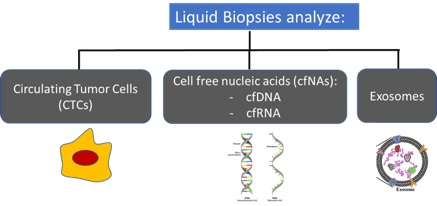
Liquid biopsy provides a minimally invasive approach for evaluating molecular information obtained through peripheral blood or other body-fluid sampling.5 Liquid biopsy workflows may also evaluate additional circulating components, including cell-free RNA (cfRNA), circulating tumor cells (CTCs), and exosomes.
Circulating RNA, including microRNA (miRNA), has been detected in the serum and plasma of patients with cancer. These RNA species are being investigated as potential sources of tumor-associated molecular information.1,6
Circulating miRNAs can be relatively stable in biological fluids because they are often protected within extracellular vesicles or by protein- and lipid-based carriers.6 cfRNA can therefore provide expression-associated molecular information that is distinct from DNA sequence-based information.
Circulating biomarkers can be present at low abundance. A downstream assay can only evaluate molecules that are successfully recovered and carried forward during sample preparation, making upstream recovery an important analytical consideration.
Revolution cfTNA kit configurations are designed to isolate cell-free total nucleic acid, including cfDNA and cfRNA, from plasma and urine. Current configurations span sample-input ranges from 1 mL through 50 mL, depending on kit configuration.
Select the workflow that matches your sample-volume range, or use the Revolution Kit Selector to identify the appropriate configuration for your application.
Designed for circulating total nucleic acid extraction from sample input volumes ranging from 1 mL through 20 mL.
View in Kit SelectorDesigned for larger sample input volumes greater than 20 mL and up to 50 mL.
View in Kit SelectorExplore scientific posters, publications, application data, and collaborative studies covering circulating nucleic acid recovery, plasma, urine, automation, and downstream molecular analysis.